
.png?width=50&name=image%20(8).png)
Want to increase bar revenue and make life easier for your F&B teams? If you’re not already using...
The Numbers Are Telling You Something
If you've ever looked at a data dashboard and felt more confused after than before, you're not alone. For many people working in arts and entertainment organizations, data analysis wasn't part of the job description ten years ago — and yet it's increasingly central to decisions about marketing, programming, and long-term sustainability.
The good news is that understanding your audience data doesn't require a background in analytics. It requires knowing what you're looking at, what it means, and what questions it's actually equipped to answer. This is a guide to the basics.
The three things your data is mostly telling you
At its core, audience data in live entertainment tends to answer three kinds of questions: Who is coming? When are they deciding to come? What are they responding to?
Everything else is variation on those themes. Revenue figures, ticket counts, campaign open rates, conversion rates — these are all, in different ways, evidence about who your audience is, how they make decisions, and what moves them to act.
Keeping those three questions in mind is a useful anchor when data starts to feel overwhelming. If you can't connect a metric back to one of those questions, it's worth asking whether you need to be looking at it at all.
✦
Customers: new, returning, and lapsed
One of the most useful ways to look at your audience is through the lens of recency and loyalty. Most organizations have three distinct audience groups that behave very differently from one another: new customers (attending for the first time), returning customers (have attended before and came back), and lapsed customers (attended previously but haven't returned recently).
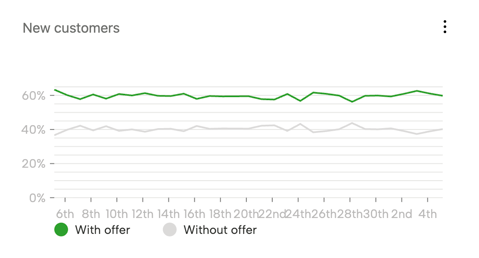
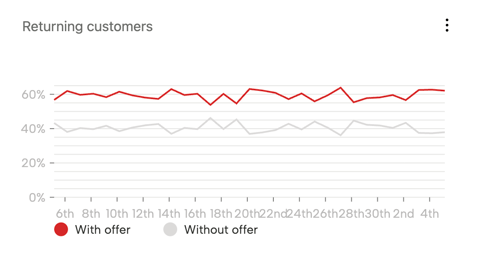
These groups respond to different things. New customers are still forming their relationship with your organization — what they experience and receive after their first visit has an outsized influence on whether they come back. Returning customers are already convinced; the question for them is deepening engagement, moving them from occasional to regular attendees or from single-ticket buyers to subscribers. Lapsed customers have an established relationship with your organization but have become inactive — they often respond to timely, specific reasons to return rather than general promotional messages.
Knowing what proportion of your audience falls into each group, and how that's changing over time, tells you a great deal about the health of your audience development.
✦
Sales pace and days out
Two metrics that often go underexplored are sales pace and average days out — how quickly tickets are selling and how far in advance patrons are booking.
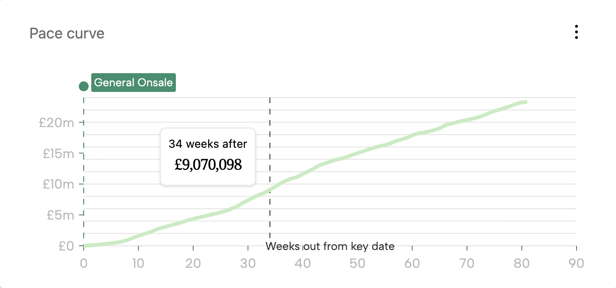
Average days out, in particular, reflects something important about how your audience engages with your programming. An audience that books far in advance tends to be loyal, familiar with your organization, and planning-oriented — they're often subscribers, members, or longtime patrons. An audience that books close to the event may be more casual or discovery-driven, potentially less familiar with your organization, and more susceptible to last-minute promotional activity.
Neither profile is better than the other, but they respond to different things. A marketing strategy built for an advance-booking audience won't necessarily work for a same-day audience, and vice versa.
✦
Channels: where your sales are coming from
Understanding which sales channels are driving your ticket revenue — direct website sales, third-party platforms, box office, phone — matters because different channels represent different kinds of audience relationships.
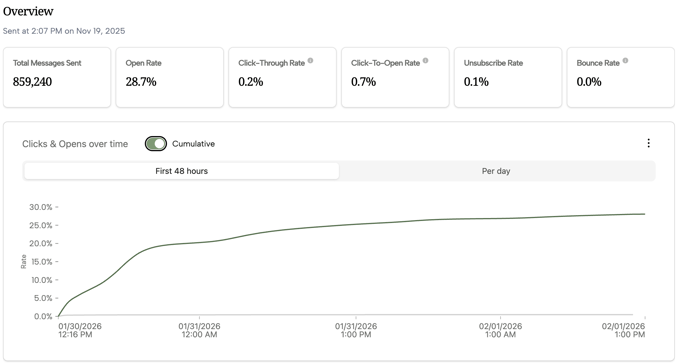
Patrons who book directly with your organization tend to be more engaged, more likely to return, and more accessible for future communication. Sales through third-party platforms may represent new audience discovery, but often at the cost of direct relationship access. The mix of channels tells you something about how your audience finds you — and where there may be opportunities to bring more of that relationship in-house.
✦
A note on what data can't tell you
Data is evidence, not explanation. It can tell you that a show sold fewer tickets than comparable productions — it can't tell you why. It can tell you that a campaign generated a strong open rate but low conversion — it can't tell you what the barrier was.
The most useful thing data does is sharpen the questions you ask. It points you toward where to look more closely, who to talk to, what to test. Organizations that treat data as a starting point for inquiry rather than a final answer tend to get more out of it — and make fewer decisions based on a misread number.
Start with the basics. Look at the same metrics consistently. Ask what you need to know before you open the report. The rest follows from there.
✦ ✦ ✦